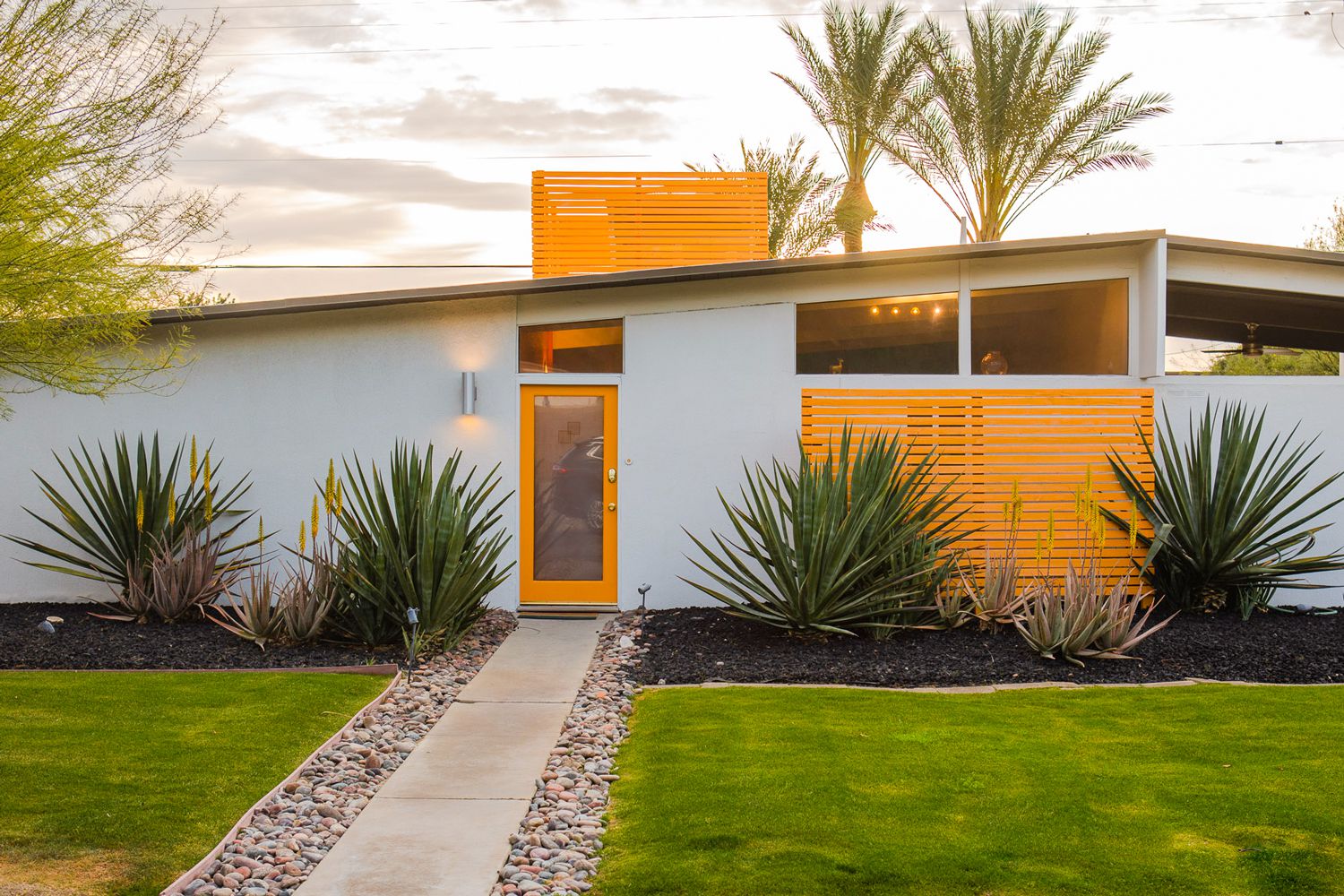
Known for clean lines, minimal decoration, and connection with nature, mid-century modern architecture is an American classic that kicked off after World War II. Mid-century modern homes are characterized by very wide, low footprints with large, open spaces, floor-to-ceiling windows, and an emphasis on bringing the outdoors in.
Although mid-century modern architecture boomed all across America from 1945 to 1969, it’s seen a major resurgence in recent years. Interior decorating styles that draw inspiration from mid-century style, like Scandinavian design and Danish Modern, have made this style accessible to millions of new homeowners.
History
Taking influences from Bauhaus and American high-prairie style homes, mid-century modern architecture was brought to the United States by European architects fleeing Nazi Germany. Some original mid-century modern designers include Walter Gropius, Ludwig Mies van der Rohe, and Marcel Breuer. Frank Lloyd Wright, the father of Modern architecture, actually trained many mid-century modern architects.
After World War II, Americans put a major emphasis on lifestyle, family time, and spending time in nature. Mid-century modern homes built across America’s suburbs reflected those ideals, with large windows that provided views of homeowners’ backyards, open living spaces where the whole family could entertain, and technological upgrades—especially in the kitchen—so homeowners spent less time cleaning and more time with their families.