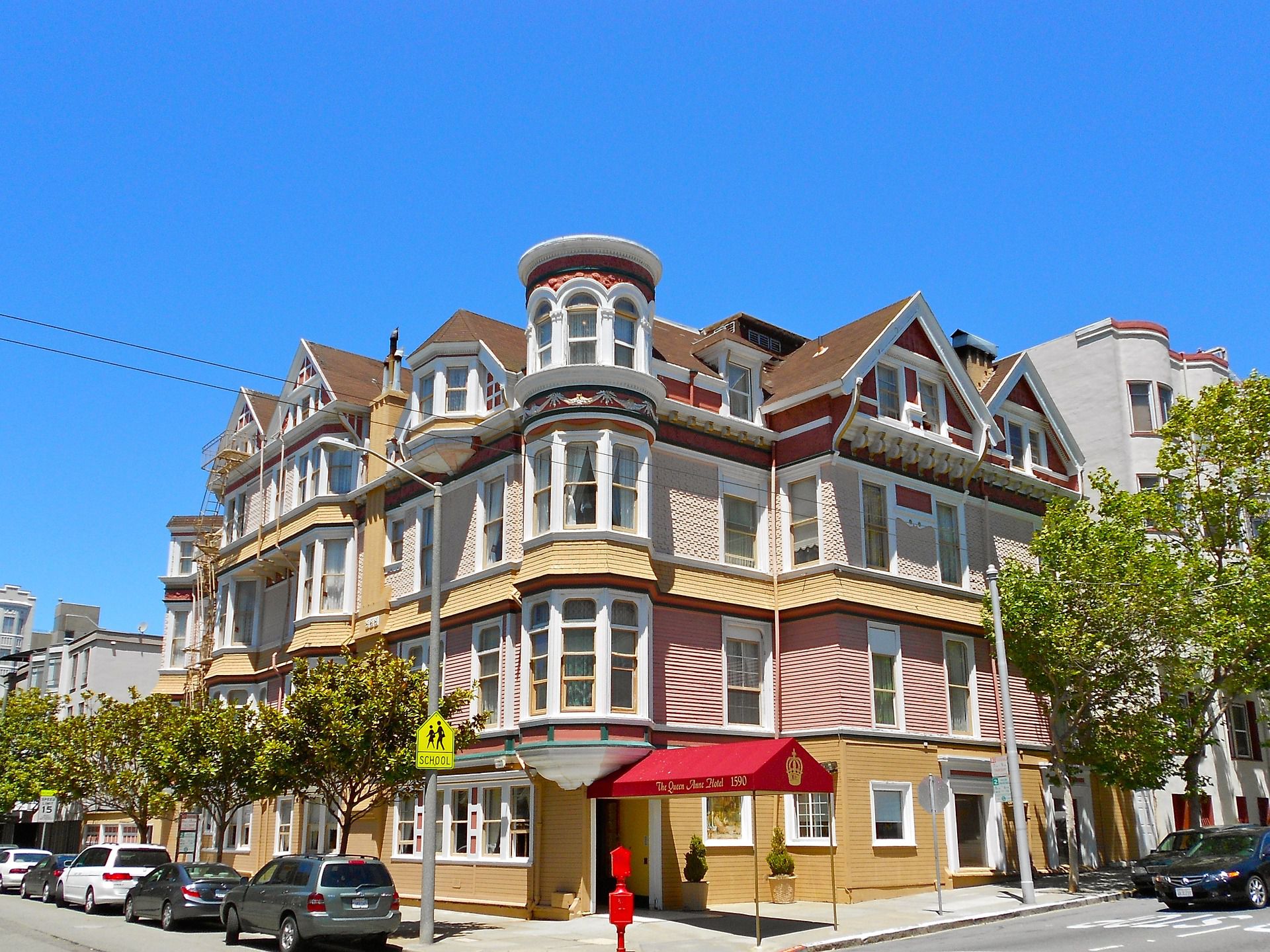
Standing out from traditional brick and sided homes in conservative color palettes, a Queen Anne-style house commands attention with its intricate detailing, colorful paint scheme, and unique towers and windows. Renewed interest in old homes has only intensified the search to find and preserve these homes that often feature a fairytale-like, gingerbread house appearance.
A true Queen-Anne house is quite iconic, though this style overlaps with other architectural styles developed during the same time period. This can make distinguishing a Queen Anne home from other Victorian-style houses a bit more complex than you may think. Learn what sets this architectural style apart, along with where it originated and its key features.
What is a Queen Anne-style House?
A subtype of Victorian architecture, Queen Anne-style houses experienced a peak of popularity from the 1880s through the 1910s. They are characterized by an intricate appearance that is a result of artistic and asymmetrical elements, combined with the use of bold, multi-color paint schemes.
Key Characteristics of Queen Anne-Style Houses
A Queen Anne-style home looks very much like a storybook house brought to reality. These artistic houses are covered in intricate detailing, trim, and latticework. Asymmetry is an integral feature of these houses. Towers, turrets, large windows, and multi-gabled, steeply pitched roofs are placed together as if in a puzzle.
Towers are often seen as polygonal or round, a distinguishing feature in Queen Anne-style houses. They are often accompanied by round turrets. Adding to this multi-layered effect, wrap-around porches are commonly seen on Queen Anne houses.
Three or more colors are often used on the exterior, adding to the whimsical feel. The color palette adds depth and emphasizes the intricate details used throughout the architecture. Stained glass can also be seen throughout the large windows, again adding to the colorful, artistic flair of these houses…